State of Slovenes, Croats and Serbs · The Entente
Ante Trumbić
President of the Yugoslav Committee (1915–1918), Minister of Foreign Affairs of the Kingdom of Serbs, Croats and Slovenes (1918–1920)
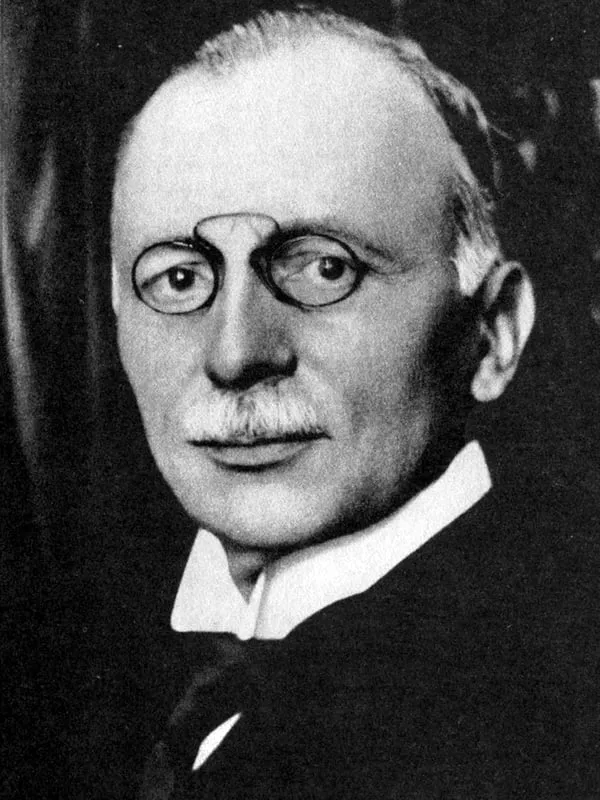
- Born:
- 17 May 1864, Split (Dalmatia, Austria)
- Died:
- 17 November 1938, Zagreb
- Author:
- Łukasz Skowroń
- Photo:
- autor nieznany, domena publiczna, Wikimedia Commons

Ante Trumbić was the most important spokesman of the South Slavs of the Habsburg Monarchy in the Allied camp. A lawyer and former mayor of Split, an Austrian subject, he went into exile after the outbreak of war and from 1915 presided over the Yugoslav Committee in London. For four years he fought on two fronts: against Italy, to which the Allies had promised the eastern coast of the Adriatic, and against the Serbian prime minister Nikola Pašić, who wanted unification on Serbian terms. He signed the Corfu Declaration with Pašić, and in November 1918 in Geneva he forced him for a few days to accept an equal partnership. The state that finally came into being, however, was not the one he had worked for.
Before the war
He was born on 17 May 1864 in Split, in Austrian Dalmatia. Some Croatian sources give the date as 15 May. He studied law in Zagreb, Vienna and Graz, where he took his doctorate in 1890. From 1894 he ran a law practice in Split. He came from the movement of the Croatian “Party of Rights” men, the supporters of Croatia’s historic state right, but over time moved towards rapprochement with the Serbs. From the mid-1890s he sat in the Diet of Dalmatia, and in 1897 briefly also in the Imperial Council in Vienna. In 1905–1907 he was mayor of Split.
Together with Frano Supilo he was the chief author of the so-called “New Course” policy. Its aim was the union of Dalmatia with Croatia-Slavonia and cooperation of the Croats with the Serbs and with the Hungarian opposition against Vienna. Croatian opposition politicians adopted this programme in October 1905 in the Rijeka Resolution, from which grew the Croat-Serb Coalition. After the annexation of Bosnia in 1908 and the Balkan Wars, Trumbić came out ever more clearly for the unification of the South Slavs outside the Habsburg Monarchy.
Exile and the Yugoslav Committee
After the assassination in Sarajevo and the outbreak of war, Trumbić, after consultations with other opposition politicians, left for Italy. There he met Supilo and the sculptor Ivan Meštrović. The Serbian government wanted to make use of the émigrés from the start. In December 1914 Serbia announced in the Niš Declaration that it was fighting for the liberation and unification of the Serbs, Croats and Slovenes, and Pašić, through Bosnian Serbs, proposed to the Croats the formation of a committee that would work with Belgrade. Trumbić and Supilo approached this with distrust. They knew from the Russian foreign minister Sergey Sazonov that Russia supported a Greater Serbia, not a Yugoslav state.
The turning point was the Treaty of London of April 1915. In it the Entente promised Italy Istria, part of Dalmatia and the islands, lands inhabited mainly by Croats and Slovenes. For Trumbić this meant that the only support against Italy could be a victorious Serbia. On 30 April 1915 the Yugoslav Committee was formally established in Paris, with Trumbić as president and Supilo as vice-president. London was chosen as its seat, and the committee arrived there in May. Its members were émigrés from various lands of the monarchy: Croats from Dalmatia and Istria, Bosnian Serbs and Slovenes. It was financed mainly by donations from the Croatian emigration in the Americas, and partly also with money from the Serbian government.
The committee carried on propaganda in the press and published pamphlets and memoranda, and in London it was supported by experts on Central Europe, the historian Robert Seton-Watson and the Times journalist Henry Wickham Steed. Trumbić sought to have the Allies recognise the committee as the representative of the South Slavs of Austria-Hungary, and the South Slavs themselves as an allied nation. Pašić consistently obstructed this, because in his eyes the only representative of the whole nation was Serbia. The dispute also concerned volunteers. Prisoners from the Austro-Hungarian army who volunteered to fight in Russia were sent to a division called Serbian and commanded by Serbian officers, not to a “Yugoslav” one as the committee wanted.
Within the committee it was Supilo who quarrelled most sharply with Pašić; he demanded guarantees of equal rights for the Croats from Serbia and spoke to Grey about it. Trumbić was more cautious. He believed that open conflict with Serbia would weaken the Croats against Italy and that unification had to be achieved at any price, provided the monarchy fell. In June 1916 Supilo left the committee, and Trumbić became its undisputed leader.
Corfu
In the spring of 1917 Serbia’s position changed. After the February Revolution it lost its Russian protector, the Allies were seeking a separate peace with Emperor Karl, and in Vienna the South Slav deputies led by Anton Korošec proclaimed the May Declaration, which envisaged unification within the borders of the monarchy. Pašić needed an agreement with the émigrés and invited them to Corfu. The talks lasted from mid-June to 20 July 1917. Trumbić defended the autonomy of the historic lands and a federal system, but had weak support in his own delegation, and Pašić threatened that if they resisted, Serbia would abandon unification and content itself with its own enlargement.
The Corfu Declaration, which both men signed on 20 July, announced a Kingdom of Serbs, Croats and Slovenes, a constitutional and parliamentary monarchy under the Karađorđević dynasty, with equal status for the three national names, two alphabets and three religions. The dispute over centralism versus federation was put off to a future constituent assembly. Trumbić read the declaration as an agreement between two equal partners, Pašić as a propaganda document that could be set aside if necessary. This difference weighed on the whole of the following year.
1918: Rome, Washington and Geneva
In the winter of 1917/1918 Trumbić held talks in London with Andrea Torre, the envoy of an Italian parliamentary committee. On 7 March 1918 they signed an agreement that recognised the unity and independence of the Yugoslavs as a vital interest of Italy and announced an amicable settlement of border disputes. In April Trumbić was one of the leading participants in the Congress of Oppressed Nationalities of Austria-Hungary in Rome, alongside Edvard Beneš and Milan Rastislav Štefánik. The agreement with Torre did not, however, bind the Italian government. The foreign minister Sidney Sonnino held to the Treaty of London and distrusted Trumbić. In June Trumbić complained to the Americans that the Versailles declaration promised independence to Poland but only sympathy to the Yugoslavs.
At this time relations with Pašić were at their worst. The committee authorised Trumbić to present its demands directly to the Allies, bypassing the Serbian prime minister. Pašić replied that it was Serbia that was liberating and uniting, and that the committee was a body it had itself called into being. According to historians, the British foreign secretary Arthur Balfour treated the Corfu Declaration as an agreement between partners and urged Pašić to come to terms with the committee, but the Allies did not recognise the committee as an allied body. In the autumn, as the monarchy was collapsing, a National Council was formed in Zagreb, which authorised the committee to represent it abroad.
Trumbić’s greatest success came at the Geneva conference of 6–9 November 1918. Together with Korošec, the president of the National Council, and with the support of the Serbian opposition, he forced the isolated Pašić, who was also being pressed by the President of France, to agree to a joint government in which Serbia and the State of Slovenes, Croats and Serbs would have equal numbers of ministers, each retaining authority over its own territory. It was a confederal solution. A few days later the Serbian government rejected it, and in Zagreb Svetozar Pribićević persuaded the National Council to proceed to unification without conditions. Trumbić, still abroad, learned of the proclamation of the Kingdom of Serbs, Croats and Slovenes on 1 December from a letter from one of the members of the delegation.
After the war
On 20 December 1918 Trumbić became foreign minister in the first government of the Kingdom of Serbs, Croats and Slovenes and together with Pašić represented it at the peace conference in Paris, defending the Adriatic coast against Italian claims. In November 1920 he signed at Rapallo the treaty with Italy that gave it Istria and Zadar and made Rijeka a free city, after which he left the government. In the constituent assembly he voted against the centralised Vidovdan Constitution of 1921. In the following years he drew ever closer to the Croatian opposition; in 1932 he drafted the so-called Zagreb Points against Serbian hegemony, and in 1933–1934, while Vladko Maček was in prison, he effectively led the Croatian Peasant Party. He died in Zagreb on 17 November 1938 and was buried in Split.
Assessment
Yugoslav historians have argued about Trumbić since the 1920s. The Czech historian Milada Paulová, whose work on the Yugoslav Committee appeared in 1925, portrayed him as a man who had to fight for an equal position against Pašić, who was guided by Serbian nationalism. Most Croatian and Slovene historians adopted this picture. Serbian historians more often stressed that it was the Serbian army and diplomacy that had won unification, and saw the committee as an organisation of émigrés with no mandate and no army.
It is generally agreed that Trumbić was a skilful lawyer and a persistent diplomat who, without a state and without an army, managed to make the Yugoslav question a subject of Allied discussions. His weakness lay precisely in that position: an émigré without an electoral mandate, dependent on the goodwill of London and Paris, could impose terms neither on Pašić nor on the politicians at home. Some historians also believe that he put off the dispute over the system of government too long for the sake of unity against Italy, and that when he finally won it in Geneva it was already too late. According to the French writer Henri Pozzi, towards the end of his life Trumbić is said to have regretted the fall of the Habsburg Monarchy, because the state he had helped to create had not fulfilled his hopes.
Sources
Spotted a mistake?Report an error
Often appears with
People who appear in the same events.