State of Slovenes, Croats and Serbs · The Entente
Anton Korošec
Chairman of the Yugoslav Club in the Imperial Council (1917–1918), president of the National Council of Slovenes, Croats and Serbs (1918)
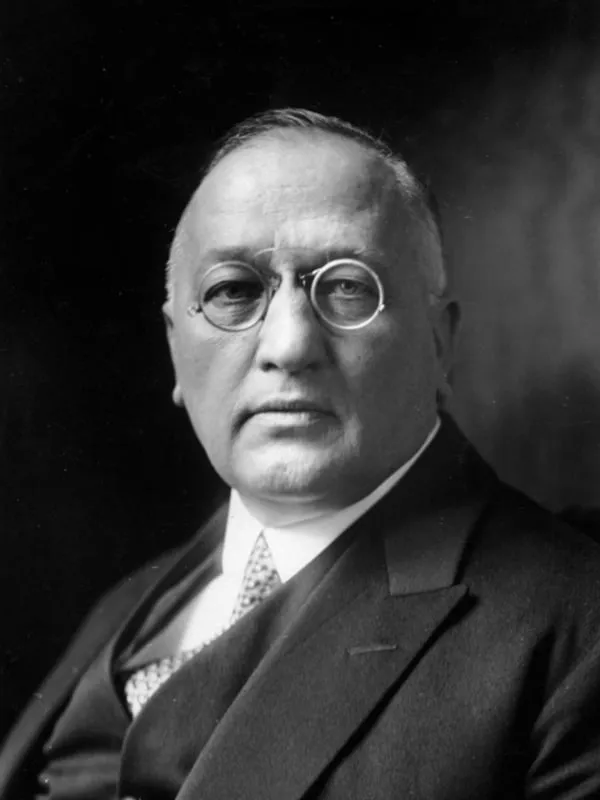
- Born:
- 12 May 1872, Biserjane near Sveti Jurij ob Ščavnici (Styria, Austria)
- Died:
- 14 December 1940, Belgrade
- Author:
- Natalia
- Photo:
- Bundesarchiv, Bild 183-2010-0420-501, CC BY-SA 3.0 DE, Wikimedia Commons

Anton Korošec was a Catholic priest from Lower Styria who within a year and a half went from being a loyal deputy in the Imperial Council in Vienna to head of the first Yugoslav state. On 30 May 1917 he read out in parliament the May Declaration, which demanded the unification of the Slovenes, Croats and Serbs of the monarchy, still under the Habsburg sceptre. A year later he led the movement that broke with the Habsburgs. In October 1918 he became president of the National Council in Zagreb and, after the collapse of the monarchy, formally the highest representative of the State of Slovenes, Croats and Serbs. He went over to the Entente camp only in the last weeks of the war, and in Geneva he defended that state’s equal standing with Serbia.
Before the war
He was born on 12 May 1872 in Biserjane near Sveti Jurij ob Ščavnici, into a peasant family in the Slovene part of Styria. He finished grammar school in Ptuj and Maribor, where he also studied theology. In 1895 he was ordained a priest, and in 1905 he received a doctorate in theology in Graz. While still at the seminary he met the priest Janez Evangelist Krek, founder of the Slovene Christian social movement, and adopted his views. As editor of a Catholic newspaper in Maribor he sharply attacked the Germans in Styria, and for one of his articles he was sentenced to six weeks’ arrest, commuted by the Emperor to a fine.
In 1906 he was elected to the Imperial Council in Vienna, in which he sat until the fall of the monarchy, and from 1909 also to the Styrian provincial diet. He belonged to the younger, more resolute wing of the Slovene Catholics, which was at odds with the leader of the Slovene People’s Party in Carniola, Ivan Šušteršič. In March 1914 he became head of the Croatian-Slovene club in the Imperial Council.
The war years and the May Declaration
At the beginning of the war Slovene politicians, Korošec among them, declared full loyalty to the monarchy. Parliament had been suspended since the spring of 1914, and in the Slovene lands, threatened by Italy from 1915, the military authorities harshly suppressed any sign of disloyalty. Politics revived only after the death of Emperor Franz Joseph in November 1916. Korošec then called a meeting of the club in Graz, at which, against Šušteršič’s wishes, it was decided to cooperate more closely with the Czechs.
When Emperor Charles announced that parliament would be convened, the South Slav deputies from Austria formed a joint Yugoslav Club and elected Korošec its chairman. At Krek’s suggestion the club prepared a declaration on constitutional rights. On 30 May 1917, at the first sitting of the reconvened Imperial Council, Korošec read out the May Declaration. In it the deputies demanded, on the basis of the principle of nationality and Croatian state right, the union of all the lands of the monarchy inhabited by Slovenes, Croats and Serbs in an independent, democratic state body under the Habsburg sceptre. According to the Slovenian Biographical Lexicon, the prime minister, Heinrich Clam-Martinic, tried just before the sitting to persuade him not to read the declaration.
The declaration still envisaged life within the monarchy, but it undermined its constitutional order, because it also covered Hungarian lands. In June 1917 Korošec had an audience with the Emperor. According to Slovene biographers, Charles then offered him a seat in Ernst Seidler’s new government, but the club refused. Even so, for some time the Yugoslav Club still voted for the provisional budget. The refusal to join the government was, however, the beginning of an increasingly sharp opposition, conducted shoulder to shoulder with the Czechs.
1918: from declaration to state
After Krek’s death in October 1917 Korošec took over the leadership of the Slovene Catholic movement. At the end of 1917 the Catholic majority of the club pushed Šušteršič aside, and Korošec became head of the reorganised party. In the winter and spring of 1918 great rallies in support of the May Declaration were held all over Slovenia, at which he was the main speaker. On 23 and 24 March 1918 in Ljubljana Slovene women presented him with books containing more than 200,000 signatures. Korošec also travelled to Zagreb, Sarajevo and Prague. In early March Croatian and Muslim politicians in Zagreb adopted a version of the declaration that no longer mentioned the Habsburgs. In May the authorities banned further agitation.
In mid-August 1918 the Slovene National Council was founded in Ljubljana, and Korošec became its president. When in mid-September Austria-Hungary proposed peace negotiations, on 2 October he read out in the Imperial Council a statement that the monarchy could speak only for the Germans and Hungarians, while the other nations demanded the full right of self-determination. A few days later the National Council of Slovenes, Croats and Serbs was formed in Zagreb, and on 17 October he was elected its president. The Council rejected Emperor Charles’s manifesto on transforming Austria into a federal state. Slovene tradition attributes to Korošec words he is said to have spoken to the Emperor when the latter tried to keep the Slovenes in a reformed monarchy: “Your Majesty, it is too late”.
Korošec spent the last days of the monarchy in talks in Vienna. According to the Slovenian Biographical Lexicon, the army command wanted the Yugoslav deputies to go to the Italian front to raise the soldiers’ spirits, and General Ottokar Landwehr, in agreement with the Emperor, proposed to him that the National Council itself conclude an armistice with Italy. The prime minister designate, Heinrich Lammasch, tried to draw him into his government. Korošec refused everything. On 25 October he left for Switzerland, not as the Council’s formal envoy but in agreement with it, to make contact with the Allies. When on 29 October the Croatian Sabor broke with the monarchy and the new state was proclaimed at a great rally in Ljubljana, the president of the National Council, with a visa only for neutral Switzerland, was already abroad. In those days power in the Slovene lands was taken over by the National Government in Ljubljana.
Geneva and unification
In Geneva Korošec first met the president of the Yugoslav Committee, Ante Trumbić, and authorised him to represent the Council in the armistice talks, but the authorisation came too late and Trumbić was not admitted to the negotiations at Versailles. On 4 November Korošec sent the Allied governments a note demanding recognition of the National Council as the government of the Yugoslavs of the former monarchy, of the Yugoslavs themselves as an allied nation, and of the Yugoslav volunteers as an allied army.
At the Geneva conference of 6–9 November Korošec and Trumbić, with the support of the Serbian opposition, stood together against the Serbian prime minister, Nikola Pašić. On 7 November Pašić, under pressure also from the French, accepted their terms. Serbia recognised the National Council as the legitimate government of the Slovenes, Croats and Serbs of the former Austria-Hungary, and a joint cabinet of twelve ministers was to be formed above both governments. It was a confederal solution that preserved the State of SHS as a separate entity.
From Geneva Korošec went to Paris on 13 November. He met Georges Clemenceau, the foreign minister Stéphen Pichon, Wilson’s adviser Edward House and Edvard Beneš, seeking recognition of the new state and of its borders with Italy. From Pichon he learned that the Serbian government had resigned and rejected the Geneva agreement. In Zagreb, meanwhile, the upper hand had been gained by the Council’s vice-president, Svetozar Pribićević, a supporter of unconditional unification. For a long time Korošec could not obtain a passport to return, and on the way he had to wait another two days in Verona. He reached Ljubljana on 2 December, the day after the Kingdom of Serbs, Croats and Slovenes was proclaimed in Belgrade. He was not present at the unification that ended the existence of the state of which he had formally been head.
After the war
On 20 December 1918 Korošec became deputy prime minister in Stojan Protić’s first government of the Kingdom of SHS, and later minister of food supply and of transport. He put forward his own autonomist draft constitution and opposed the centralised Vidovdan Constitution of 1921. Throughout the interwar period he was the undisputed leader of the Slovene People’s Party, several times a minister, and in 1928–1929, after the assassination of Stjepan Radić, the first non-Serb prime minister of the kingdom. After King Alexander introduced his dictatorship, he sat for a year in General Petar Živković’s government, then went into opposition and in 1933 was interned. In 1935–1940 he was again a minister, first of the interior, then of education. Towards the end of his life he spoke out against communists, freemasons and Jews, and in the autumn of 1940 he initiated one of the antisemitic decrees, which limited the number of Jewish pupils and students. He died in Belgrade on 14 December 1940 and was buried in Ljubljana.
Assessment
In Slovene historiography Korošec is a key and at the same time a disputed figure. His supporters see him as a politician who in 1917 and 1918 skilfully led the Slovenes from loyalty to the Habsburgs to a part in the Yugoslav state and saved them from the fate of a nation divided between Italy, Austria and Hungary. Slovene historians often call him an excellent tactician. Critics point out that the May Declaration still fell within the framework of the monarchy in 1917, and that Korošec broke with it only when its defeat was certain.
Korošec’s role in November 1918 is judged in different ways. Some historians believe that his departure for Switzerland deprived the National Council of its president in the decisive weeks and made it easier for Pribićević to carry through unification without guarantees of autonomy. Others stress that only from abroad could he make contact with the Allies, and that the Geneva agreement was the greatest achievement of the politicians of the former monarchy, which was undone only by the Serbian government. His later career in the kingdom, and especially the antisemitic measures of his last years, are judged critically even by authors sympathetic to him on the matters of the war years.
Sources
Spotted a mistake?Report an error
Often appears with
People who appear in the same events.