United Kingdom · The Entente
Robert Cecil
Under-Secretary of State for Foreign Affairs (1915–1918), Minister of Blockade (1916–1918)
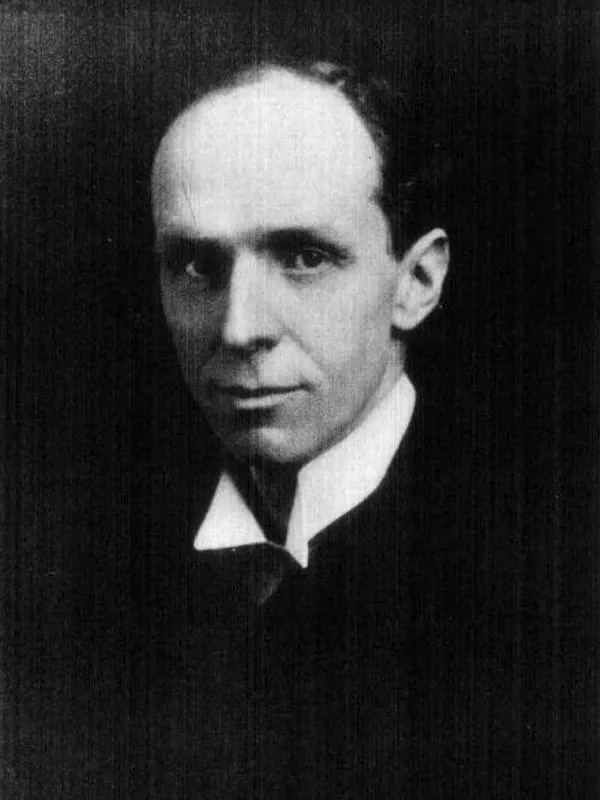
- Born:
- 14 September 1864, London
- Died:
- 24 November 1958, Chelwood Gate (East Sussex, England)
- Author:
- Natalia
- Photo:
- autor nieznany, domena publiczna, Wikimedia Commons

Lord Robert Cecil, son of a prime minister and cousin of Arthur Balfour, embodied during the war the two faces of British diplomacy. As Minister of Blockade from February 1916 to July 1918 he directed the economic war against Germany: he rationed supplies to neutral countries, kept blacklists of firms trading with the enemy and fended off protests from the United States. At the same time, as Under-Secretary of State at the Foreign Office, he began writing earlier than anyone else in the government about an organisation that after the war would prevent further conflicts. From these reflections grew his role in creating the League of Nations, to which he devoted the rest of his life and for which he received the Nobel Peace Prize in 1937.
Before the war
He was born on 14 September 1864 in London, the third son of the Marquess of Salisbury, three times prime minister and long-serving Foreign Secretary. Until the age of thirteen he was taught at home, then at Eton and at University College, Oxford, where he made his name as a debater. For two years he was his father’s private secretary, and from 1887 a barrister. He specialised in commercial law and co-wrote a textbook on the subject, and in 1899 he became a Queen’s Counsel. He was a devout Anglican and all his life defended the position of the Church of England.
In politics he went his own way. In 1906 he entered the House of Commons as a Conservative, but he was a committed free trader and opponent of Joseph Chamberlain’s protective tariffs, and as a result in 1910 he found himself out of parliament. He returned in 1911 at a by-election in Hitchin, Hertfordshire. The new Conservative leader Andrew Bonar Law admitted him to the party’s inner leadership. Cecil opposed Irish home rule and the disestablishment of the Church in Wales, but even before the war he was regarded as a Conservative of independent, moralistic views.
The Red Cross and the Foreign Office
In 1914 Cecil was almost fifty and unfit for military service. He threw himself into the work of the British Red Cross and in France organised a bureau that sought news of wounded and missing soldiers and passed it on to their families. When the coalition government was formed in May 1915, the Conservatives received several posts, and on 30 May Cecil became Parliamentary Under-Secretary of State in Edward Grey’s Foreign Office. As Under-Secretary Cecil answered questions on foreign policy in the House of Commons, all the more so since Grey sat in the House of Lords from July 1916. He spoke, among other things, about Japan’s accession to the London pact of the Allies, about Greece and about prisoners of war. He particularly often had to defend the blockade, which the press and some MPs considered too lenient.
Minister of Blockade
From the autumn of 1915 the newspapers accused the government of letting everything Germany needed flow to it through neutral Holland and Scandinavia. On 23 February 1916 Asquith announced that all the work of the offices engaged in cutting the enemy off from supplies would be directed by a single minister of cabinet rank. That minister was Cecil, who kept his post as Under-Secretary as well. The new Ministry of Blockade was formed from the Foreign Office’s former contraband department and several war trade departments.
Cecil relied on statistics. Imports of each commodity into neutral countries were henceforth to correspond roughly to their pre-war needs, and surpluses were stopped at sea. The ministry concluded agreements with merchants and business associations of the neutral states, and firms suspected of trading with Germany were put on the blacklist, with which British subjects were forbidden to trade. The extension of the list to American firms provoked in the summer of 1916 a formal protest from the United States, and President Woodrow Wilson felt that America’s patience with the British was running out. Cecil argued in the House of Commons that the aim was only to ensure that British credit and British ships did not serve the enemy. It was also he who in July 1916 brought about the withdrawal of the Declaration of London of 1909, judging that patching it up with successive orders did more than anything to feed the neutrals’ distrust.
The entry of the United States into the war in April 1917 transformed the situation. The Americans, who had earlier protested against British methods, now applied them themselves, and the neutral countries lost their chief defender. In December 1917 Cecil represented Britain on the Allied Maritime Transport Council, and in the spring of 1918 he supported the creation of the Allied Blockade Committee. In March 1918, when Holland refused to charter its ships, Cecil agreed with Washington on their simultaneous requisition in the ports of both countries.
In Lloyd George’s government
In the crisis of December 1916 Cecil, together with Austen Chamberlain and Lord Curzon, was among the Conservative ministers who at first viewed the plans of David Lloyd George critically, and then told Asquith that they would not remain in the government without Law and Lloyd George. After Asquith’s resignation Cecil kept both his posts. Towards the new prime minister, however, he felt a deep distrust, which after the war turned into open hostility.
When Balfour took over the Foreign Office, Cecil often deputised for him. In December 1916 it was he who received Wilson’s peace note from the American ambassador, barely concealing his resentment that the president put both sides on the same footing. In the spring of 1917, while Balfour was on his mission to America, he ran the ministry. He answered in the House of Commons for policy towards Greece, Albania and Serbia, talked with representatives of nations seeking independence, and in the autumn of 1917 his ministry recognised the Polish National Committee in Paris. In July 1918 he handed the Ministry of Blockade to Laming Worthington-Evans and himself became Balfour’s deputy with the title of Assistant Secretary of State. In August that year he took part in the talks with Edvard Beneš that led to the recognition of the Czechoslovaks as an Allied nation.
The road to the League of Nations
Cecil was one of the first members of the government to start thinking about the post-war order. In the autumn of 1916 he circulated to the cabinet a memorandum on ways of reducing the risk of future wars. In it he wrote that neither the destruction of German militarism nor frontiers drawn on the national principle would ensure a lasting peace. He proposed that states should undertake to submit disputes to a conference before taking up arms, and that blockade and financial sanctions should be imposed on those who refused. His experience as Minister of Blockade had convinced him that the combined naval and financial power of the great powers could force any state into compliance. He himself later called this text the first document from which official British support for the League of Nations began.
In 1917 he developed these ideas in a further memorandum, and in the autumn he asked Balfour to set up a committee to draft a scheme for the future organisation. The committee, chaired by Lord Phillimore, prepared a report which in May 1918 Cecil, with the cabinet’s consent, sent to President Wilson. In November 1918 he left the government because he did not want to put his name to the implementation of the act disestablishing the Church in Wales, but almost at once he took charge of the Foreign Office’s League of Nations section.
After the war
At the Paris Peace Conference in 1919 Cecil was the chief British negotiator on the commission which, under Wilson’s chairmanship, drew up the Covenant of the League of Nations. Together with the American lawyer David Hunter Miller he reworked the president’s draft, which he himself called in his diary a very bad document. Wilson’s adviser, Colonel Edward House, regarded him as the only man in the British government who truly had the League at heart. Cecil also favoured a milder treaty with Germany and its swift admission to the League.
From 1923 to 1945 he presided over the League of Nations Union, the largest British organisation promoting the idea of collective security. In 1923 he was created Viscount Cecil of Chelwood and became Lord Privy Seal in Stanley Baldwin’s government, and from 1924 to 1927, as Chancellor of the Duchy of Lancaster, he was responsible for League affairs. In 1927 he resigned in protest at the government’s stance at the failed disarmament conference in Geneva. In 1934–1935 he organised the so-called Peace Ballot, in which more than 11 million Britons declared their support for the League and for disarmament. In 1937 he received the Nobel Peace Prize. He died on 24 November 1958 at his home in Chelwood Gate, East Sussex, at the age of 94.
Assessment
Cecil is one of the most paradoxical figures of British wartime politics. Historians of the blockade stress that it was under his direction that it became truly effective: the system of quotas, agreements with neutrals and blacklists cut Germany off from most overseas supplies. The blockade also struck the civilian population. German calculations from the end of 1918 attributed more than 700,000 civilian deaths to hunger and disease. Many scholars consider this figure inflated and point out that the German war economy also contributed to the shortages, but no one denies that the blockade brought Germany enormous suffering. Cecil was aware of this price and all the more sought a way of preventing wars in future by the mere threat of sanctions.
His contribution to the creation of the League of Nations is beyond doubt. Scholars of its origins regard him, alongside Wilson and Jan Smuts, as one of the principal authors of the Covenant. Critics, on the other hand, reproach him for idealism and for overestimating the power of public opinion, which he believed would restrain aggressors in a crisis. The League’s failure in the 1930s showed the limits of that faith. Even so, Cecil remained one of the few politicians of his generation who drew from the experience of the war the conclusion that future peace required permanent institutions, not merely victory.
Sources
Spotted a mistake?Report an error
Often appears with
People who appear in the same events.