Austria-Hungary · The Central Powers
Leopold Berchtold
Ambassador in St Petersburg (1906–1911), foreign minister of Austria-Hungary (1912–1915), court dignitary of Emperor Charles I (1916–1918)
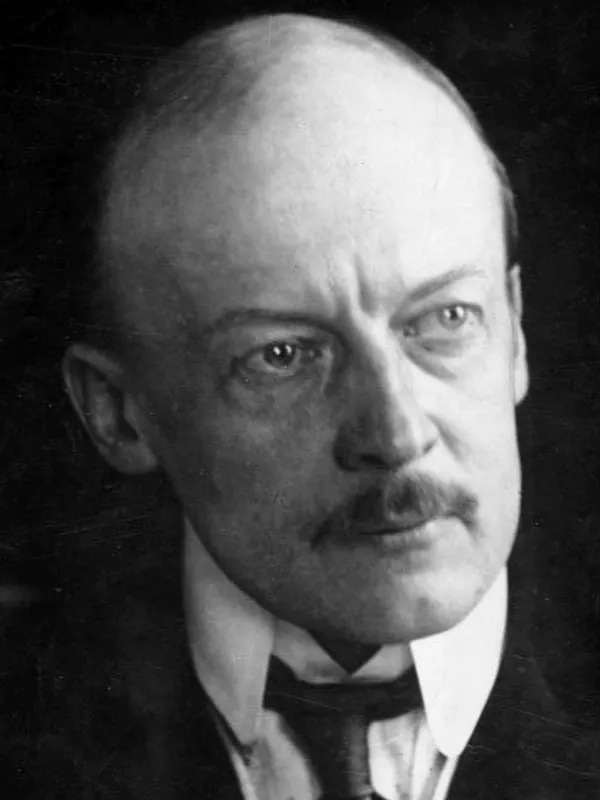
- Born:
- 18 April 1863, Vienna
- Died:
- 21 November 1942, Peresznye (Hungary)
- Author:
- Łukasz Skowroń
- Photo:
- autor nieznany, CC BY-SA 3.0 DE, Wikimedia Commons

Count Leopold Berchtold directed the diplomacy of Austria-Hungary for not quite three years, from February 1912 to January 1915. They covered the two Balkan wars and the July crisis. After the Sarajevo assassination it was he who sent to Berlin the mission that brought back the German “blank cheque”, who persuaded the reluctant Hungarian prime minister to move against Serbia, who stood behind the ultimatum of 23 July 1914 and who signed the telegram declaring war. A wealthy aristocrat with impeccable manners, regarded as an indecisive man, he thus played one of the leading parts in the outbreak of the world war. Half a year later he lost his post in a dispute over concessions to Italy.
Before the war
He was born on 18 April 1863 in Vienna. The Berchtold family came originally from the Tyrol but held extensive estates in Moravia and Hungary, and Leopold was reputed to be one of the richest men in the monarchy. He grew up at Buchlov (PL) castle in Moravia, where he learned Czech, Slovak and Hungarian. Asked whether he felt German, Hungarian or Czech, he is said to have answered that he was Viennese, and that in a conflict between the nations he would take “the side of the emperor”. He was educated at home, studied law and in 1887 entered the service of the governor’s office in Brno.
In 1893 he joined the diplomatic service and in Budapest married Countess Ferdinanda (Nandine) Károlyi, heiress to a great fortune. He served at the embassies in Paris and London, and from 1903 as counsellor in St Petersburg. In December 1906 he became ambassador there, succeeding Alois Aehrenthal, who had taken over the foreign ministry. In this post he came to know the Russian court well, and Russia’s distrust of Vienna. In September 1908 Aehrenthal met the Russian foreign minister Alexander Izvolsky at Berchtold’s castle of Buchlau (Buchlov). Their verbal understanding preceded the annexation of Bosnia and Herzegovina, after which Izvolsky claimed he had been deceived. In 1911 Berchtold left St Petersburg.
In February 1912, after Aehrenthal’s death, Emperor Franz Joseph I appointed him minister of the imperial house and of foreign affairs, and thereby chairman of the joint council of ministers. According to the “Neue Deutsche Biographie”, Berchtold believed he was unsuited to the role and accepted the office against his will. He was 49 and the youngest foreign minister in Europe.
The Balkan wars
Berchtold wanted to preserve peace and the territorial status quo in the Balkans, but the war that Montenegro began in October 1912 quickly put an end to these plans. His proposal to press Turkey into reform and decentralisation no longer changed anything. Within a few weeks the Balkan states had routed the Turks, and Serbia reached the Adriatic. Vienna had no intention of allowing this. Berchtold considered war with Serbia but pulled back at the last moment. Instead he obtained the powers’ decision to create an independent Albania, which cut Serbia off from the sea. The Treaty of London of May 1913 left the drawing of its borders to them. After the second Balkan war and the Peace of Bucharest, however, Serbia was almost twice as large as before the wars, and Russian influence in the Balkans had grown. In Vienna this was seen as a defeat, and Berchtold gained a reputation as a weak and vacillating minister.
The July crisis
After the murder of Franz Ferdinand on 28 June 1914 Berchtold, until then cautious, put himself at the head of the advocates of war. He was pushed by younger diplomats of the ministry on the Ballhausplatz, above all by the head of his private office, Count Alexander Hoyos. It was Hoyos whom Berchtold sent to Berlin with a memorandum and a letter from the emperor, and on 5 July Wilhelm II promised Austria-Hungary full support. On 7 July, at the joint council of ministers, which Leon Biliński also attended, Berchtold demanded that Serbia be “rendered harmless for ever by a show of force”. Together with the chief of staff, Franz Conrad von Hötzendorf, he wanted to strike quickly, preferably without a declaration of war. The Hungarian prime minister, István Tisza, who feared Russian intervention, opposed this. Berchtold worked on him for a week, and on 14 July Tisza gave way and agreed to an ultimatum. On 19 July the council of ministers approved the draft, and on 21 July Berchtold put the text before the emperor.
The ultimatum was delivered in Belgrade on 23 July. Berchtold deliberately did not inform the monarchy’s formal allies, Italy and Romania, in advance, because he expected them to demand compensation for their consent. His diplomats, on the other hand, assured Russia and Britain that the monarchy had no territorial aims in Serbia. On 25 July the minister in Belgrade, Giesl, judged the Serbian reply unsatisfactory and broke off diplomatic relations. When the British foreign secretary, Edward Grey, proposed a conference of the powers, the German state secretary Gottlieb von Jagow replied that Berchtold was at Bad Ischl and that an extension of the deadline no longer seemed possible. According to the historian Holger Herwig, on 26 July Berchtold reported to the emperor that Serbian troops had fired on Austro-Hungarian soldiers at Temes-Kubin (Kovin (PL)), although no such clash had taken place. The report was meant to convince Franz Joseph that the monarchy would be fighting in self-defence. On 28 July Berchtold sent the Serbian prime minister, Nikola Pašić, the telegram declaring war. On 31 July he told the council of ministers that the British proposals could be discussed only once Russia halted its mobilisation, and that same day the monarchy ordered general mobilisation. On 13 August he received the British ambassador once more, who informed him that Britain and France were declaring war on Austria-Hungary. According to the ambassador, Berchtold did not seem surprised.
The Italian dispute and dismissal
From the first weeks of the war Italy was Berchtold’s most important concern. The ally from the Triple Alliance had declared its neutrality and invoked Article VII of the treaty, which gave it a right to compensation for changes in the Balkans. From December 1914 the new foreign minister, Sidney Sonnino, pressed ever harder, and the Italian ambassador declared in Vienna that Rome demanded compensation even for a temporary occupation. The Germans, who feared Italy would join the Entente, sent the former chancellor Bernhard von Bülow to Rome, and he urged Vienna to make concessions. Berchtold finally gave way. On 9 January 1915 he proposed to the emperor that the Trentino be ceded to Italy. Franz Joseph, Tisza and Conrad would not hear of it. Tisza believed that concessions would encourage Romania to make demands on Transylvania. On 13 January 1915 Berchtold had to go, and his successor was Tisza’s confidant István Burián. As a parting gift the emperor gave him the diamonds to the Grand Cross of the Order of St Stephen.
At the court of Charles I
Berchtold played no further part in politics, but he stayed close to the court. He became an adviser to the heir to the throne, Archduke Charles, and according to the English Wikipedia in March 1916 the lord high steward of his household. After Charles I came to the throne in November 1916 he held the highest court offices. Sources describe them differently: according to some he was grand chamberlain (Oberstkämmerer), according to the German Wikipedia the last lord high steward of the imperial court from May to November 1918. At the beginning of November 1918, as the monarchy fell apart, he escorted a transport of Habsburg jewels from the treasury in the Vienna Hofburg to Switzerland.
After the war
After the war Berchtold lived first in Switzerland and from 1923 mainly in Hungary, on his estate at Peresznye (PL) near Kőszeg. He lived as a grand seigneur, far from politics. He died there on 21 November 1942 and was buried in the family tomb at Buchlov. In 1969 he was played by John Gielgud (PL) in the film “Oh! What a Lovely War”.
Assessment
Contemporaries described Berchtold as courteous, tactful, cultivated and socially charming, but unsure of himself and remote from political reality. The Neue Deutsche Biographie sees in him an aristocrat placed in a role he could not carry. It holds him responsible for a whole series of failed decisions, from the policy towards Italy and Romania, through the Balkan wars, to the diplomatically unprepared road from Sarajevo to war with Serbia. It adds, however, that in July 1914 the hard line was supported by most of his circle and of educated opinion, so the whole blame cannot be laid on him alone.
Historians still argue about his responsibility for the outbreak of the war. There is no doubt that he played a leading role in framing the uncompromising ultimatum, in the declaration of war on Serbia and in the rejection of British mediation. In July 1914, unlike during the Balkan wars, he did not waver but directed the whole process himself. The dispute is over whether he reckoned with war against Russia. Some historians believe the Austro-Hungarian leaders gave it little thought. Others, such as Alexander Watson, argue that Berchtold knew well how Russia would take Serbia’s humiliation, and Herwig holds that he acted with calculation. The American historian Samuel R. Williamson titled his study of him “The Man Who Could Have Prevented the Great War”.
Sources
Spotted a mistake?Report an error
Often appears with
People who appear in the same events.