1917: Flanders
Battle of Langemarck (1917)
- Dates:
- 16–18 August 1917
- Front:
- Western Front
- Location:
- The Ypres (Ieper) salient, from the Menin road and Inverness Copse across the Frezenberg ridge and the village of Langemarck to the Drie Grachten bridgehead by the IJzer floods, West Flanders (Belgium)On the battle map →
- Sides:
- United Kingdom and NewfoundlandDouglas Haig, Hubert GoughFranceFrançois AnthoineGerman EmpireRupprecht, Crown Prince of Bavaria, Friedrich Sixt von Armin
- Result:
- Inconclusive. In the north the Allies took Langemarck and advanced one to one and a half kilometres, but in the centre and on the Gheluvelt plateau German counter-attacks drove the British back to their start lines.
- Author:
- Łukasz Skowroń
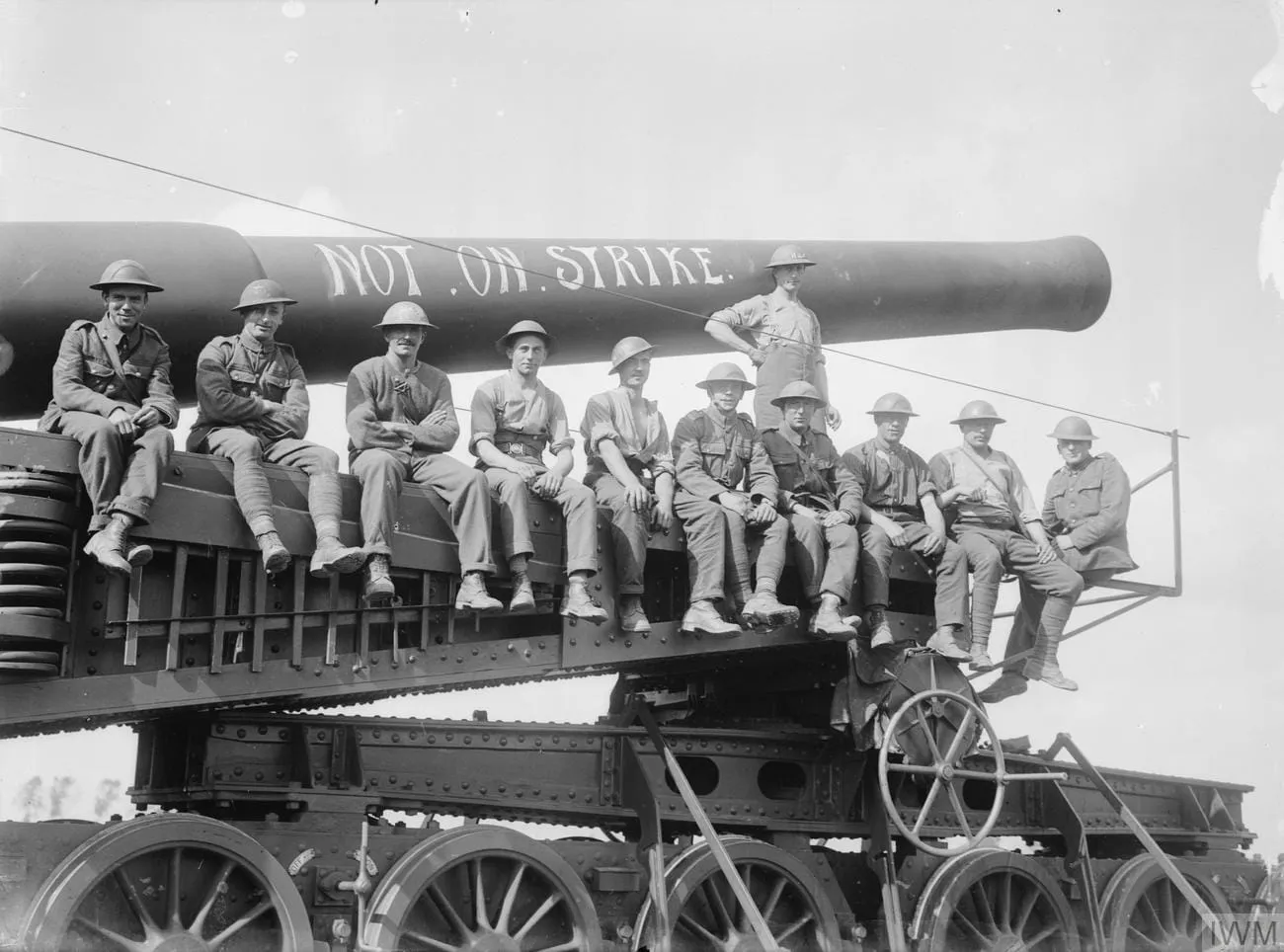
The Battle of Langemarck was the second great attack of the Third Battle of Ypres. At 4.45 a.m. on 16 August 1917, after two weeks of rain and several postponements, eight divisions of General Hubert Gough’s British Fifth Army and the French I Corps attacked the German Fourth Army on a front running from the Ypres–Menin road to the floods along the IJzer. On the northern flank the attack succeeded: the British 20th and 29th Divisions took the ruins of the village of Langemarck, and the French, wading across flooded meadows, captured the strongly fortified Drie Grachten bridgehead. In the centre and the south it was a different story. Two Irish divisions, the 16th (Irish) and the 36th (Ulster), bled to death in front of concrete shelters near Frezenberg, and on the Gheluvelt plateau the Londoners of the 56th Division and the men of the 8th Division, who in the morning had pushed through Glencorse Wood and reached the Hanebeek stream, were driven back almost to their start lines by evening. The battle deepened the crisis of confidence in Gough and led Field Marshal Douglas Haig to hand the leading role in the offensive to General Plumer.
Name and dates
The name and the dates 16–18 August 1917 were fixed after the war by the British Battles Nomenclature Committee, which counted this attack as the second of eight battles at Ypres in 1917. It took 18 August as the end, when, after the last fighting for Inverness Copse and for the shelters on the northern flank, both sides turned to consolidating their positions. The Germans did not give this fighting a separate name and counted it as part of the Battle of Flanders. The battle should not be confused with the fighting at Langemarck in October 1914, which in Germany gave rise to the myth of the young volunteers. The village, which before the war had more than 7,000 inhabitants, was by 1917 nothing but a heap of rubble.
Background
The first attack, the Battle of Pilckem Ridge of 31 July – 2 August, gave the British and French the Pilckem ridge and the line of the Steenbeek stream, but on the most important sector, the Gheluvelt plateau, General Claud Jacob’s II Corps had stalled after a few hundred metres. Then it rained for several days. Gough wanted first to take the plateau and only then to attack with his whole army, but the rain kept pushing both dates back. On 10 August II Corps finally took the Westhoek ridge, but Inverness Copse and Glencorse Wood, which it had captured in the morning, were retaken by the Germans the same day. The general attack was fixed for 14 August. Jacob asked for a delay, because his artillery had not managed to suppress the German batteries behind the plateau, but Gough agreed to put it off by only one day: he was in a hurry, because the coastal attack at Nieuport with a landing from the sea (Operation Hush) required the high tides at the end of August. On 14 August a storm with a downpour passed over, and the date was put back another day, to 16 August. Over two days more than 20 millimetres of rain fell. On 15 August Haig, who from the start had insisted on concentrating forces on the plateau, left the matter “entirely to the discretion” of Gough.
On the same day the Canadians attacked Hill 70 near Lens to tie down German reserves away from Flanders.
Plan and forces
Gough again attacked along the whole front of his army. On the plateau II Corps, with the 56th (London) Division and the 8th Division plus a brigade of the 18th Division, was to take the objectives of 31 July, that is the green line in Polygon Wood and on the ridge beyond the Hanebeek stream, advancing about 1.5 kilometres, and to cover itself to the south with a line from Stirling Castle to Black Watch Corner. Further north General Herbert Watts’s XIX Corps, with the 16th (Irish) and 36th (Ulster) Divisions, was to climb the Frezenberg ridge and the Zonnebeke spurs, General Ivor Maxse’s XVIII Corps, with the 48th and 11th Divisions, was to attack from Sint-Juliaan (St. Julien), and Lord Cavan’s XIV Corps, with the 20th (Light) and 29th Divisions, was to take Langemarck and the German third position (the Wilhelm line) beyond the village. On the left flank General François Anthoine’s French First Army was to occupy the Drie Grachten bridgehead and the wedge of land between the lower Steenbeek and the canal. The attack was supported by a creeping barrage moving about 90–100 metres every four to five minutes, a machine-gun barrage and smoke shells, which were to screen the infantry on successive objectives. Tanks were assigned to fight in only a few places, and even so most of them got stuck.
Facing them stood General Friedrich Sixt von Armin’s Fourth Army, subordinate to Crown Prince Rupprecht of Bavaria. Its defence rested on concrete shelters, often hidden in the ruins of Flemish farms, and on counter-attack divisions (Eingreifdivisionen) waiting behind the front. The Germans kept most of their guns and their best divisions on the Gheluvelt plateau, from which their artillery could see the whole battlefield. Opposite the French, in the north, they had themselves flooded the meadows between Diksmuide and Bikschote and fortified the Drie Grachten bridgehead, where three canals met below the road to Luigem.
The worst prepared for the attack were the Irish divisions. Since the end of July they had been carrying ammunition and supplies for others, and from 4 August they had held the front in the Hanebeek and Steenbeek valleys under the eyes of German observers. By 15 August they had lost about a third of their men in the front line to shellfire. The battalions of the 16th Division went into the attack with about 330 men instead of 750. Special bombardments by heavy artillery had not destroyed the fortified farms on the slopes in front of them; this was reported, but the reports were not believed.
Course
16 August, the north: Langemarck. The day was overcast but dry. At 4.45 a.m. the creeping barrage began, and the German artillery replied late. The 20th (Light) Division crossed the Steenbeek on footbridges laid by sappers during the night and, in single file, skirted the flooded shell holes. The right brigade went round the village to the east to block the road from Poelkapelle (PL), from which a counter-attack was expected, while the left brigade, after taking the Au Bon Gite blockhouse, which had repelled every attack since 31 July, and the shelters by the station, entered the ruins of Langemarck. By about eight o’clock the village was in British hands, and soon afterwards the division occupied the Wilhelm line beyond it. Sergeant Edward Cooper of the 12th Battalion, King’s Royal Rifle Corps, who with four men attacked a concrete blockhouse and forced its garrison to surrender with his revolver, and Private Wilfred Edwards of the 7th Battalion, King’s Own Yorkshire Light Infantry, who after all the officers of his company had been lost bombed another blockhouse and took three officers and 30 men prisoner, received the Victoria Cross for that day. To their left the 29th Division took the hamlet of Wijdendrift, and the Newfoundland Regiment, a year after its disaster at Beaumont-Hamel, went through the third objective and also occupied Japan House farm. Before ten o’clock the division was consolidating on all its objectives. German counter-attacks in the afternoon were repulsed.
The French. General Paul Lacapelle’s French I Corps faced defences that were easier to spot and destroy than those in front of the British, and for several days the French artillery had pounded the Drie Grachten bridgehead into rubble. On 16 August the infantry waded across the floods and took it, while on the Poesele peninsula the Germans held out until dusk. On the right flank the French crossed the Steenbeek and reached the Broombeek stream. Resistance came only from the Les Lilas and Mondovi blockhouses. During the night the Germans tried to strike from them between the French and the British, but were repulsed. During the night and in the morning French and Belgian airmen bombed camps in Houthulst Forest and railway stations in the rear.
16 August, the centre: Frezenberg. On XIX Corps’ sector, from the Roeselare railway to Sint-Juliaan, the attack ran after a few hundred metres into the untouched fortified farms of Potsdam, Vampire and Borry, Gallipoli, Somme and Pond Farm. For lack of men they were not mopped up, and their garrisons fired into the backs of the Irishmen of the 16th Division who had gone on. Only isolated groups reached the objectives. The Ulstermen of the 36th Division got stuck on new wire and in the marshes along the Steenbeek, losing the barrage. At about nine o’clock, screened by heavy fire and smoke shells, the counter-attacks of the 5th Bavarian Division and the 12th Reserve Division began. The forward units of both Irish divisions were surrounded and wiped out or taken prisoner, and the airmen, although visibility was good, did not warn the artillery. At about 10.15 a.m. Watts ordered the barrage brought back to the start line, regardless of the soldiers who were still holding out in front of it. In the afternoon Gough demanded that the attack be resumed, but Watts, after consulting his divisional commanders, replied that it was impossible: the last reserve brigades were already holding the start line. Among those killed that day was the chaplain of the 16th Division, the Irish Jesuit William Doyle, who died while giving the last rites to the wounded. Lance-Corporal Frederick Room of the Royal Irish Regiment received the Victoria Cross for carrying the wounded under fire at Frezenberg. Between them XVIII Corps took the rest of Sint-Juliaan and a few strongpoints by the Poelkapelle road, but was stopped by the Maison du Hibou and Triangle Farm blockhouses.
16 August, the south: the Gheluvelt plateau. On the edge of the plateau the 53rd Brigade stalled in front of Inverness Copse, under fire from a blockhouse at its corner which heavy artillery was to have destroyed the previous evening, but the bombardment was by mistake not carried out. It managed only to form a flank guard along the southern edge of Glencorse Wood. The 169th Brigade of the 56th Division pushed through Glencorse Wood, took the sunken road with a line of shelters in its middle and reached Polygon Wood, while the 167th Brigade, skirting mud more than a metre deep on the northern edge of Nonne Bosschen wood, split in two. At about six and seven in the morning the German 34th Division broke into the gaps, surrounded the forward battalions and pushed the rest back. The 8th Division to their left crossed the Hanebeek on hand-carried footbridges and took the Iron Cross, Anzac and Zonnebeke redoubts on the Anzac spur, but under fire from both flanks it was left on its own. At 9.30 a.m. the infantry of the German 3rd Reserve Division, brought up behind the front by lorry, attacked it across the spur. German smoke shells hid the British rockets calling for a protective barrage, and an airman’s report was too vague, so the artillery opened fire only at 10.15 a.m. By evening both divisions had fallen back almost to their start lines, and a German attack from Polygon Wood at 4 p.m. was broken only by the fire of the British artillery.
17–18 August. On 17 August French heavy howitzers pounded the Les Lilas and Mondovi blockhouses all day, until in the evening their garrisons surrendered. Since 16 August the French had taken more than 400 prisoners and 15 guns, and their right flank, pushed forward to the Broombeek, secured the British against being outflanked from the north. That day the 48th Division attacked Maison du Hibou in vain, and Gough called a conference of corps commanders at which he announced a series of separate attacks on the objectives not taken on 16 August. On 18 August a brigade of the 14th (Light) Division, which had relieved the exhausted 56th Division during the night, broke into Inverness Copse. A German counter-attack pushed it back to the middle of the wood, but there, with the help of two tanks on the Menin road, it held on, repulsing three more attacks. On the northern flank the 29th Division pushed its posts beyond the Broombeek. The German artillery, with observation from higher ground, showered the new line beyond Langemarck with shells for several days, inflicting heavy losses on the 20th Division.
Casualties
The exact losses of the battle itself cannot be separated from the August fighting. Robin Prior and Trevor Wilson estimate the losses of Gough’s army on 16 August at about 15,000 men. The British official history gives 68,010 killed, wounded and missing from 31 July to 28 August, including 10,266 killed. Deducting the losses of the first days of the offensive leaves about 36,000 men from 4 to 28 August, including the attack of 10 August and local fighting after the battle. The Irish divisions suffered most: according to Irish research, nearly 600 men of each were killed on 16 August, and from the beginning of August to 18 August the 16th Division lost more than 4,200 and the 36th Division almost 3,600 men, more than half their strength. In those days the 56th Division lost 2,175 and the 8th Division 2,111 men. The French, well supported by their artillery and facing weaker defences, lost according to Prior and Wilson only about 350 men.
The German official history gives the Fourth Army about 24,000 casualties from 11 to 21 August, including 5,000 missing and 2,100 prisoners, and the loss of about 30 guns. Gough wrote in 1931 of 2,087 prisoners and 8 guns taken by the Fifth Army.
Significance
The battle gave the British Langemarck and about one and a half kilometres of ground in the north, but did not bring them closer to the objectives of the offensive, because on the Gheluvelt plateau the Germans had again held on entirely. Rupprecht wrote that the defence rested on two bastions, the plateau and Houthulst Forest, and that British progress between them was not dangerous. General Erich Ludendorff was less calm: while he considered 10 August a success, he called 16 August another heavy blow, and the August fighting in Flanders cost the Germans more than they had expected.
On the British side the battle became the beginning of a crisis of confidence. Gough explained the failure in the centre by saying that the Irish “did not like shellfire”. Haig was not convinced by this “playing of the Irish card”: he noted that the divisions had been exhausted and the artillery preparation ineffective. The commander of the 36th Division, General Oliver Nugent, wrote on the evening of 16 August that the losses were very heavy and the attack had failed all along the line. Of Gough he wrote in those days that no one who talked to him would think him capable of command. On 18 August Haig wrote in his diary that the commanders had acted in too great a hurry and that the artillery should have been given three more days. The defeat at Frezenberg, in which Catholic supporters of home rule and Protestant unionists from Ulster bled together, two months after their joint victory at Messines, was felt particularly painfully in Ireland. At the end of August Gough himself admitted in a conversation with one of the chaplains that part of his army had lost heart for the fight.
Gough still tried to make up for the losses with a series of separate attacks. On 19 August XVIII Corps, with the help of tanks and a smoke screen, took the farms by the Poelkapelle road at minimal cost, but the attacks of 22 and 27 August on the plateau failed, and on 24 August the Germans retook Inverness Copse. On 25 August Haig moved the army boundary northwards and handed the main task, the capture of the Gheluvelt plateau, to General Herbert Plumer’s Second Army. After three weeks of preparation and dry weather Plumer took the plateau in limited attacks on 20 and 26 September. The date of the Battle of Langemarck has also been set in stone: the names of British soldiers missing in the Ypres salient up to 15 August 1917 were carved on the Menin Gate in Ypres, and those of the men lost later on the wall of Tyne Cot Cemetery near Passchendaele.
Spotted a mistake?Report an error